We talk a lot about warning signs, prevention and knowing what to look for. We talk about asking the hard questions and paying attention when someone doesn’t seem like themselves. But sometimes I wonder if we make suicide prevention feel more complicated than it has to be.
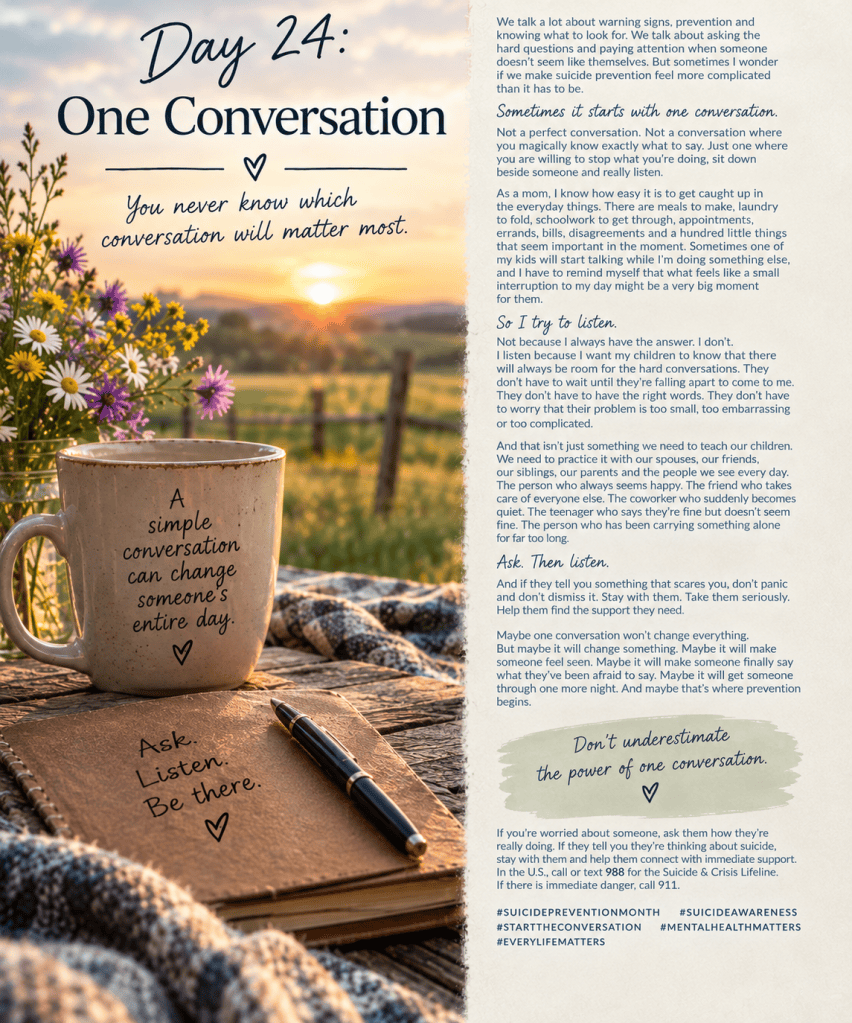
Sometimes it starts with one conversation.
Not a perfect conversation. Not a conversation where you magically know exactly what to say. Just one where you are willing to stop what you’re doing, sit down beside someone and really listen.
As a mom, I know how easy it is to get caught up in the everyday things. There are meals to make, laundry to fold, schoolwork to get through, appointments, errands, bills, disagreements and a hundred little things that seem important in the moment. Sometimes one of my kids will start talking while I’m doing something else, and I have to remind myself that what feels like a small interruption to my day might be a very big moment for them.
So I try to listen.
Not because I always have the answer. I don’t.
I listen because I want my children to know that there will always be room for the hard conversations. They don’t have to wait until they’re falling apart to come to me. They don’t have to have the right words. They don’t have to worry that their problem is too small, too embarrassing or too complicated.
And that isn’t just something we need to teach our children.
We need to practice it with our spouses, our friends, our siblings, our parents and the people we see every day. The person who always seems happy. The friend who takes care of everyone else. The coworker who suddenly becomes quiet. The teenager who says they’re fine but doesn’t seem fine. The person who has been carrying something alone for far too long.
Ask.
Then listen.
And if they tell you something that scares you, don’t panic and don’t dismiss it. Stay with them. Take them seriously. Help them find the support they need.
I’ve spent a lot of time thinking about conversations I wish had happened differently. That’s one of the painful parts of losing someone to suicide. You can spend years wondering what you could have asked, what you could have noticed and whether one different conversation might have changed something.
I will never know the answer to those questions.
But I do know what I can do now.
I can be more willing to ask. I can listen longer. I can take people seriously when they tell me they aren’t okay. I can teach my children that asking for help isn’t weakness. I can remind the people I love that they don’t have to carry everything alone.
Maybe one conversation won’t change everything.
But maybe it will change something.
Maybe it will make someone feel seen.
Maybe it will make someone finally say what they’ve been afraid to say.
Maybe it will get someone through one more night.
And maybe that’s where prevention begins.
Don’t underestimate the power of one conversation.
If you’re worried about someone, ask them how they’re really doing. If they tell you they’re thinking about suicide, stay with them and help them connect with immediate support. In the U.S., call or text 988 for the Suicide & Crisis Lifeline. If there is immediate danger, call 911.
#SuicidePreventionMonth #SuicideAwareness #StartTheConversation #MentalHealthMatters #EveryLifeMatters