In light of the recent tragedy in our small city, I want to talk about postpartum depression (PPD) and postpartum psychosis (PPP).
If you have never been through postpartum depression or watched someone you love struggle with it, you really can’t fully understand what it feels like. You can read about it. You can listen to someone explain it. But there is a difference between knowing the words and actually experiencing the darkness, exhaustion, anxiety and overwhelming emotions that can come with it.
But even if you don’t understand it, you can have compassion.
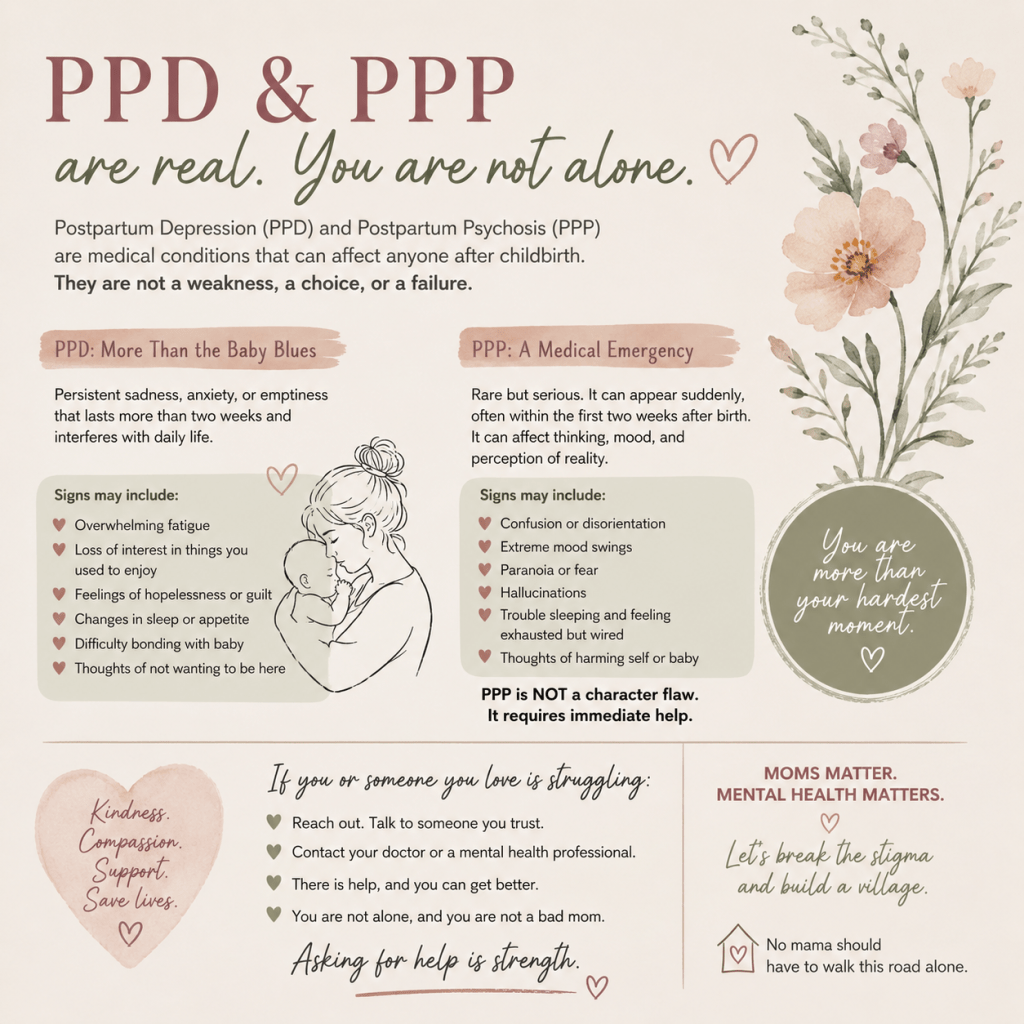
There is also an important difference between postpartum depression (PPD) and postpartum psychosis (PPP).
PPD is more than the baby blues. It can involve overwhelming sadness, anxiety, hopelessness, guilt, irritability, exhaustion and feeling like you simply cannot cope. It can happen during pregnancy or anytime during the first year after having a baby. And having PPD does not mean a mother doesn’t love her children or that she is a bad mother.
Postpartum psychosis is different. It is rare, affecting roughly 1 to 2 women out of every 1,000 births, but it is a medical emergency. A woman experiencing PPP can lose touch with reality. She may experience hallucinations, delusions, paranoia, severe confusion, agitation or rapidly changing moods. She may not even realize she is sick.
I know there are people who will say, “If you knew she needed help, why didn’t someone get her help?”
Unfortunately, it isn’t always that simple. You cannot always force someone to accept help, and our systems have limits when it comes to intervening without violating a person’s rights.
None of this excuses horrific actions. But understanding mental illness doesn’t mean excusing what happened. We can have compassion for a mother who was severely mentally ill while still grieving deeply for the children who were harmed.
We need to be able to hold both truths.
And we need to do better at recognizing when mothers are in crisis, supporting families before they reach that point, and finding ways to keep vulnerable people from falling through the cracks.
Compassion doesn’t erase accountability. It simply reminds us that sometimes there is a whole lot more to the story than what we see from the outside.
A good rule of thumb, as a woman, is to remember: This Could Be You.
#PostpartumDepression #PostpartumPsychosis #MaternalMentalHealth #MentalHealthAwareness #Compassion